
There is a specific way in which a narcissist is able to take advantage of the autistic inability to understand the response of people to them. For years, I believed everyone hated me because my friend convinced me of it.
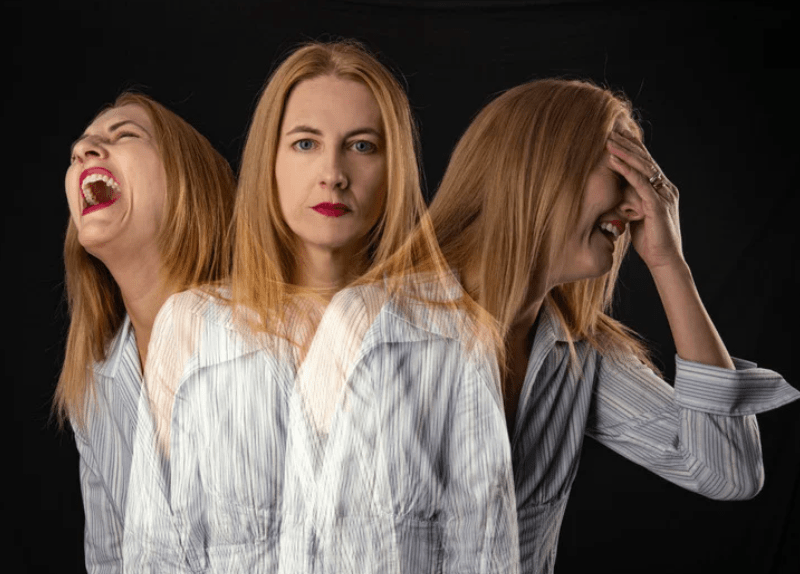
At a party I had no intention of attending but somehow made it to, I met a person who enjoyed my writing. When they came up to me to tell me so, they stood alarmingly close to my face. It could have been because we were in a crowded space, it was loud or they just had a different sense of personal space than I do, but I was very uncomfortable with the proximity so I, very politely, told them they were too close to my face. They took a step back and we continued our conversation. I did not think very much of it but in the ensuing months, I did notice they were more hostile, standoffish and non-communicative with me than they had been before but it wasn’t like we had a real relationship with one another, it was parasocial at best, so I forgot about it until the person came up in conversation with a very close friend and I mentioned that I thought I had done something to upset them.
“Oh, they hate you,” my friend said to me, “You know, we are friends, and they have mentioned how much they dislike you.”
“Was it because I told them they were too close to my face at that party?” I asked my friend.
Unaware of the story, my friend asked me to explain what I meant and after I did, confirmed that it was absolutely because I had asked them to step back. My friend explained that people don’t respond well to things like that and then cited examples of the many other times I had been in social situations where I had enforced physical boundaries and how that too had led to people deciding they did not like me. I believed them because they presented evidence and, above all, I trusted them.
“You know, you are difficult to like, it happens to you all the time,” my friend said to me, “It’s not because of you, people just don’t respond well to someone like you, because of their own insecurities and your very direct manner. You should just not go into such unfamiliar social spaces without me.”
I nodded my head and agreed with them. They were right. So many times before I had been given feedback that I was unlikeable and I did, after all, do *weird* things. At this point, it’s important to qualify the term “weird” because it does a lot of heavy-lifting and as I have learnt in the last few years, my *weird* behaviour falls in a few different categories and differently impacts how someone reacts to me (and if you too are autistic, or of a neurotype that has similar manifestations, you may get it).
There is ideologically weird, which is basically a function of environment. In small-town India, I am weird for being liberal, queer and wearing pants, but in South Delhi, I am not weird for any of that. I am conscious of dislike based on ideological weirdness but I don’t give a shit about it, in fact, it is a political identity to be opposed to certain things and I am happy to advocate even if it singles me out. Then, there is *fun* weirdness—quirk, oddity or eccentricity—of the kind that is unusual but benign, just based on something you are, do or like that is not very common (and I genuinely believe everyone has this form of weirdness to some degree). Like, my grandfather, he used to eat cake with ketchup, that’s weird, but it’s also a feature of him. This type of weirdness tends not to get you disliked very often. We like quirks. They are fun or funny. I don’t think anyone dislikes me for mine but I do think that when we say the word “weird” this is the category that everyone immediately pictures and as a result of that, they say things to the effect of championing weirdness, telling you that weird is what makes us unique and there is no need to be self-conscious of being weird, and that causes those of us whose primary weirdness falls into the final category to feel like we are not being seen. Neurotype-dependent *weirdness* is the category of weirdness to which I am not conscious but about which I am most insecure in terms of acceptance and likeability.
It’s not ideological or fun, because as an autistic person, I am weird in ways that don’t clock as *interesting* but as annoying, suspicious, cold/calculating or odd in a repulsive way. When I was in the second grade, I decided it was time for me to make friends, so I made a chart of all the groups of friends in my class, approached each group and informed them that I would like to try their group out for two-days so we could evaluate if we were a good fit. They did not think that was *weird* in a good way. They decided I was *weird* and launched a “We Hate Ancilla” group, effectively ensuring my friend-evaluation project went nowhere. I demonstrate that kind of weird a lot. Sometimes, I get nauseated because the environment around me does not smell *neutral*. I lose my mind when things are one-minute late. When I write about my fun habit of wearing the same clothes every day people find it amusing to read, but when I continually show up to parties and events in the same outfit, people derisively ask if I don’t have other clothes (and I honestly tell them that I don’t). When it comes to warmth, manners or social gatherings, I come off as extremely rehearsed in my manner (because I am, it’s what I think I am supposed to do and it’s very easy to say “just be yourself” when your template of being yourself includes social communication systems in a way that is unconsciously engrained). I am not conscious of this *weirdness* but I am aware that it exists and that it alienates people. More importantly, I am aware that this *weirdness* of mine is the reason I have had issues of acceptance amongst peers since I was a child.
When it comes to ideologically-based exclusion, it sucks but we do tend to find our community one day (like queer or kink) but exclusion by neurotype extends to *everything* and often even amongst “your people” it follows. I was (and maybe, am) accustomed to being disliked, whether that was in school, university, at work, in queer communities, kink communities, feminist communities, basically, you name it. And like many neurodiverse people, I latched onto people who recognised this inability to interpret the world and served as interpreters for me. I miss a lot but the primary thing I miss is how people are responding to me. In action, it translates to questions about whether you would like me to keep talking to you/contacting you/bonding with you, but in concept it translates to what do you *feel* about me and do you like me?
Again, if you are tempted to tell me that I should not care about what people *think* about me, this may be a function of neuro-privilege because if you were fundamentally excluded from society, you would not feel about it as one does when they believe *I don’t care what you think because I have people who like me for me and they are the ones who matter*. When every room you enter deems that you are weird and excludes you because of it, it becomes a lot harder to view weirdness as a fun, quirky thing for which you stand. So, when you have people you trust who *interpret* the world for you and can tell you which aspect of your being (of which it is genuinely hard to be conscious in the moment) is being responded to and how, it feels like a relief. My friend was my interpreter for a lot of the social world. In fact, until her, I didn’t even interact with it very much. I worked, I fucked/loved and I existed in my solitary universe. I did not make *friends* and I interacted with people in functional or professional capacity. My friends *brought me out into the world* and began to edify me about it. I trusted her.
She frequently told me that people disliked me, and I did not venture into those spaces again. Sometimes, when I really liked someone, she told me why I had misinterpreted that. Sometimes, when I perceived hostility, she told me I was right. Basically, she made me see how everyone was uncomfortable with me but I felt like she was helping because she also told me why, and simultaneously, reassured me that *she* loved me and thought I was amazing. Later, after we stopped being friends, I revisited a lot of spaces and people who allegedly *disliked* me and I found that many, many seeds of discord had been sown by her or that she had told people I did not like *them*. It may sound silly to fixate on the concept of *like* but that’s not it, this was a large-scale gaslighting operation and it governed so much of my relationship with the *world*.
My friend was a narcissist. Not in the “just throw the term around because it loosely fits” way but in the very diagnosable way and in my life, I have had the same relationship I had with *this* narcissist with two others, but I could not see that as clearly because their motivations were different even though their methods were similar. All of them told me what the world really thought of me and then guided, coerced or violenced me into complying with how they thought I should respond (which was always by sequestering myself into their cocoon). My mother, the first narcissist, told me everyone hated me because she didn’t want me to be in spaces where the attention would be turned away from her towards me so she taught me I was too ideologically weird to be accepted. My former partner, told me everyone hated me, because he wanted all my attention to himself so he could continue to abuse me, and if I went out into the world and realised I could have kinship with other people, he would lose his power. My friend, told me everyone hated me, and used the insecurity I had about my neurotype to reinforce it, the oblivion I had because of to become the voice I trust about the world, so that I would always need her, I would always be beholden to her, I would always put her above everyone else in my life and I would never challenge her position as dazzling/brilliant in shared social spaces (because I would never become a fixture in those spaces where I was told everyone disliked me). My friend, aside from being a narcissist, was also a haver of many, many advanced degrees in psychotherapy and general brilliance so she did a much, much better job than the other two narcissists at altering my perception of reality. When that relationship with my friend ended, my entire understanding of the world of people ended and collapsed alongside it.
Not only could I not trust anyone’s interpretation of the world for me, unlike people who are not autistic (etc), I had functionally no system of my own understanding and, I had an additional decade, of existing in social spaces I had shared with her which I believed (as I was taught) were completely disdainful of me or I had entirely rejected because I had been taught they disliked me by her. This, obviously, wasn’t the extent of the dark-patterns in our relationship. She also had me convinced me were soul-mates because we were so *similar*, even though she would just emulate me, she had impersonated me to other people, borrowed my likeness by obsessing over my writing, indulged a fascination with my trauma (and I suspect, attempted an experiment where having me reiterate it repeatedly was attempting to see if she could fabricate and instil a part of it as memory inside my head or make me doubt it myself), told dozens of people tall tales of things I said about them, ended many relationships using me as scapegoat, blamed all her bad behaviour on my “influence” and preyed on my tendency to *help* people by always being in crisis around me (while partying and living her life with others). Now, I am not saying it was my *fault* that she was able to do this to me, but her understanding of my autism and my lack of understanding or support on how to navigate it, made it easier for her (as it did for other narcissists) to do it.
There are parts of the world, even parts of myself, that I do not understand well at all but sometimes autistic people are represented as being oblivious about that which we are oblivious about but it’s not true. For sure, I do not have a very good understanding of how someone is responding to me or whether they *like* me, but I am aware, through years of existing as myself in the world, that I do not have a very good understanding of those things. I am aware that I have some *weirdness*, even though I do not always know what it is, and I am insecure about what that weirdness means in terms of exclusion or acceptance. So when someone demonstrates a dazzling knowledge of people, especially someone like a doctor of the human mind, I trust them even if I have been burnt before because my brain reaches out for social structures of expertise or it wouldn’t know where else to go for information, and in that, my brain relied on someone I considered an expert, loved and trusted to help me understand the world, but they created a whole other world they wanted me to see instead. A world they designed for me so it could benefit them.
It was only after my friend and I broke-up, and after I spent two-years in two different types of therapy, that I started to see the patterns of the *narcissist abuses autistic person through gaslighting* pipeline. I started to see how I never checked with anyone if I genuinely made them dislike me—like the close-talker—but just trusted my friend, and provided her with information that she could use to justify the dislike because it is where my brain naturally went due to my own insecurity. I started to see how terrified I was of the world. I started to see how I actually had no evidence of how people were allegedly perceiving me according to her.
When I went out into the world again, and that took a really long time, I realised that obviously the people who perceive the weirdness of my neurotype as unlikeable did exist, but the vast majority of spaces from which she had insisted I stay away were not unwelcoming to me at all. People didn’t dislike me. When I told them not to hug me or stand too close to my face, they didn’t think I was too weird to include in their world. Most often, they just apologised, and tried not to do it again. It is very challenging for me to be out in the world, genuinely learning to navigate it through a language of my own development, but I can see now how my temptation to let someone else explain it made me more susceptible to a certain type of person and how easily my entire world can collapse in the absence of a form of abuse I understand.
 Ancillary Kink Support
Leave a comment